
What Is Otitis Media? Understanding One of Childhood’s Most Common Infections
Andrea R. Gravatt, MD FAAP FAWM
Professor of Pediatric Medicine, University of Washington School of Medicine (retired status)
and
Clinical Professor of Pediatric Medicine, Elson S Floyd College of Medicine
Washington State University (retired status)
Key Takeaways:
Worldwide, middle ear infection (acute otitis media) is one of the most common infectious diseases of childhood.
By 2 years of age, nearly half of all children have experienced at least one episode of acute otitis media.
Accurate diagnosis of acute otitis media remains challenging, thus contributing to unnecessary antibiotic prescribing and potential adverse effects associated with antibiotic treatment.
Improving diagnostic accuracy may support antibiotic stewardship, improve clinical outcomes, and reduce complications associated with childhood ear infections.
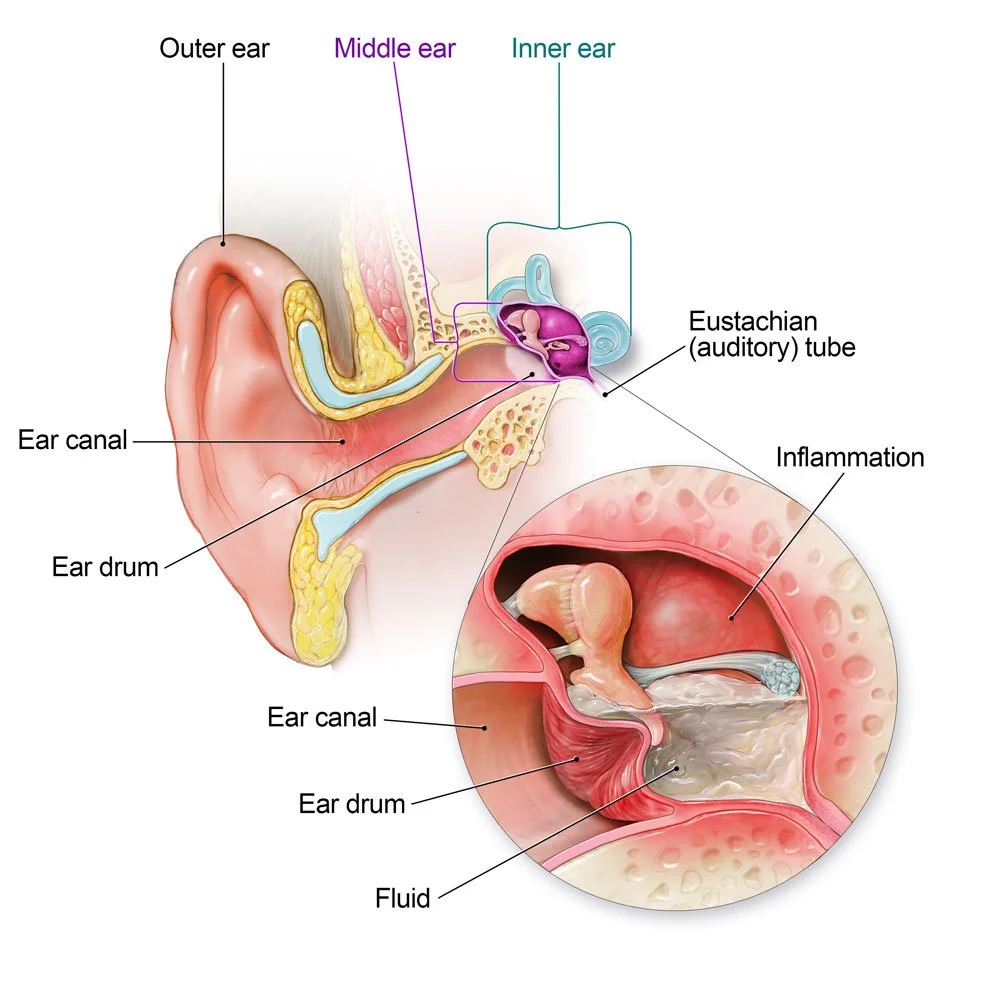
What Is The Difference Between Otitis Media with Effusion and Acute Otitis Media
Otitis media (OM) is a general term referring to inflammation of the middle ear space, often associated with the presence of fluid in the middle ear space. Under normal conditions, the middle ear space contains only air and no fluid. The small hearing bones — malleus (hammer), incus (anvil), and stapes (stirrup) — small muscles, nerves, and blood vessels are also in that space. Following an upper respiratory tract infection, there may be dysfunction of the eustachian tube—the narrow passage that connects the middle ear to the back of the nose and upper throat. This can result in negative pressure within the middle ear space.
This negative pressure promotes fluid accumulation in this small space, which can cause symptoms. When fluid is present without signs of acute infection, the condition is called otitis media with effusion (OME). When viruses and/or bacteria from the nose and throat enter the middle ear space, an infection develops. This acute infection is referred to as acute otitis media (AOM). AOM is among the most common reasons children seek medical care and receive antibiotics.
Children have a shorter, more horizontally oriented eustachian tube than adults, making them more susceptible to middle ear disease, particularly during the first few years of life.
How Common Are Ear Infections?
Otitis media is a significant disease affecting children worldwide. The Global Burden of Disease Study estimates that approximately 391 million episodes of otitis media occurred worldwide in 2021. Despite advances in vaccination, antimicrobial therapy, and access to healthcare, otitis media remains an important and common cause of childhood illness.
In the United States, acute otitis media accounts for more than 15 million pediatric episodes annually and remains one of the most common reasons why children seek medical care. By 2 years of age, approximately 41% of children will have experienced at least 1 episode of acute otitis media, and nearly 13% will have experienced recurrent disease.
The economic impact in the USA is also substantial. Otitis media in children younger than 5 years of age is associated with billions of dollars in annual healthcare expenditures, including costs related to outpatient visits, medications, emergency care, surgical procedures, and caregiver productivity losses.
What Are The Symptoms of Otitis Media?
Acute Otitis Media (AOM)
Ear pain
Fever
Irritability
Fussiness
Sleep disruption
Hearing changes
Ear drainage
Balance abnormalities
Otitis Media With Effusion (OME)
No symptoms
Hearing changes
Sensation of ear fullness or popping sensation
Balance abnormalities

Recurrent And Chronic Otitis Media With Effusion
Some children experience repeated episodes of AOM during early childhood. Recurrent episodes, particularly when associated with persistent middle-ear fluid for more than 3 months, may result in temporary conductive hearing loss. Persistent hearing loss during critical periods of development may contribute to delays in speech and language development.
For children with recurrent acute otitis media or persistent middle-ear effusion, additional monitoring may be recommended. In selected children, a tympanostomy tube, also known as a pressure equalization (PE) tube, is placed. This is a surgical procedure in which a small tube is inserted through the tympanic membrane to ventilate the middle ear space and allow fluid to drain. Tympanostomy tubes may reduce the burden of recurrent disease in appropriately selected children when persistent effusion is affecting hearing, speech, and language development.
Why Accurate Diagnosis Matters
Diagnosing ear infections can be more difficult than many people realize.
Current clinical evaluation relies on:
Access to medical care
Provider experience
Symptoms
Medical history
Visual examination of the eardrum
Assessment of middle ear fluid
Assessment for complications related to OM
Several factors can make evaluation challenging, including patient movement, cerumen, limited visualization, anatomy, examiner experience, and variability in interpretation.
Research has shown considerable variation in diagnostic accuracy among healthcare providers. Some studies report accuracy estimates ranging from approximately 30% to 67.5% when compared with specialist assessment. Providers also report diagnostic uncertainty in a substantial percentage of otitis media encounters.
Diagnostic challenges may contribute to overdiagnosis, underdiagnosis, and failure to recognize complications.

Otitis Media and Antibiotic Stewardship
AOM remains one of the leading reasons antibiotics are prescribed for children.
While antibiotics are critically important for appropriately selected children with bacterial infections, viral infections do not require antibiotic treatment. Unnecessary administration of antibiotics may result in the development of:
Diarrhea
Rash
Vomiting
Medication-related adverse events including severe allergic reactions
Antimicrobial resistance
Potential disruption of the developing gut microbiome
To mitigate side effects, clinical guidelines emphasize accurate diagnosis, careful patient selection, and thoughtful antibiotic use. Improving diagnostic precision may help clinicians identify children most likely to benefit from antibiotic therapy, prevent complications from AOM, and reduce unnecessary antibiotic exposure in children who may not require treatment.
Looking Ahead
Although advances in vaccination and medical care have improved outcomes for children with ear infections, diagnostic uncertainty remains a significant clinical challenge.
Emerging diagnostic technologies are being developed to provide more objective, quantitative, and reproducible assessments of middle ear disease. These approaches include advanced imaging, optical technologies, artificial intelligence, and ultrasound-based solutions designed to improve diagnostic confidence and support clinical decision-making.
As these technologies continue to evolve, there is significant opportunity to improve diagnostic accuracy, strengthen antibiotic stewardship, reduce unnecessary healthcare utilization, and improve outcomes for children with otitis media.
References
Shaikh N. Otitis Media in Young Children. N Engl J Med. 2025;392(14):1418-1426.
GBD 2021 Upper Respiratory Infections Otitis Media Collaborators. Global, Regional, and National Burden of Upper Respiratory Infections and Otitis Media, 1990-2021. Lancet Infect Dis. 2025;25(1):36-51.
Chen R, Deng J, Sun Y, et al. Global, Regional and National Burdens of Otitis Media in Children and Adolescents From 1990 to 2021 and Its Predictions to 2040. Front Public Health. 2025;13:1552405.
Ahmed S, Shapiro NL, Bhattacharyya N. Incremental Health Care Utilization and Costs for Acute Otitis Media in Children. Laryngoscope. 2014;124(1):301-305.
Gaddey HL, Wright MT, Nelson TN. Otitis Media: Rapid Evidence Review. Am Fam Physician. 2019;100(6):350-356.
Buchanan CM, Pothier DD. Recognition of Paediatric Otopathology by General Practitioners. Int J Pediatr Otorhinolaryngol. 2008;72(5):669-673.
Folino F, Caruso M, Bosi P, et al. Acute Otitis Media Diagnosis in Childhood: Still a Problem in 2023? Ital J Pediatr. 2024;50(1):19.
Gerber JS, Jackson MA, Tamma PD, et al. Antibiotic Stewardship in Pediatrics. Pediatrics. 2021;147(1):e2020040295.
Rosenfeld RM, Shin JJ, Schwartz SR, et al. Clinical Practice Guideline: Otitis Media with Effusion (Update). Otolaryngol Head Neck Surg. 2016;154(Suppl 1):S1-S41.
Rosenfeld RM, Tunkel DE, Schwartz SR, et al. Clinical Practice Guideline: Tympanostomy Tubes in Children (Update). Otolaryngol Head Neck Surg. 2022;166(Suppl 1):S1-S55.
Butler AM, Brown DS, Durkin MJ, et al. Association of Inappropriate Outpatient Pediatric Antibiotic Prescriptions With Adverse Drug Events and Health Care Expenditures. JAMA Netw Open. 2022;5(5):e2214153.
Hum SW, Shaikh KJ, Musa SS, Shaikh N. Adverse Events of Antibiotics Used to Treat Acute Otitis Media in Children. J Pediatr. 2019;215:139-143.e7.
McDonnell L, Gilkes A, Ashworth M, et al. Association Between Antibiotics and Gut Microbiome Dysbiosis in Children. Gut Microbes. 2021;13(1):1-18.
Lieberthal AS, Carroll AE, Chonmaitree T, et al. The Diagnosis and Management of Acute Otitis Media. Pediatrics. 2013;131(3):e964-e999.
Marom T, Kraus O, Habashi N, Tamir SO. Emerging Technologies for the Diagnosis of Otitis Media. Otolaryngol Head Neck Surg. 2019;160(3):447-456.